
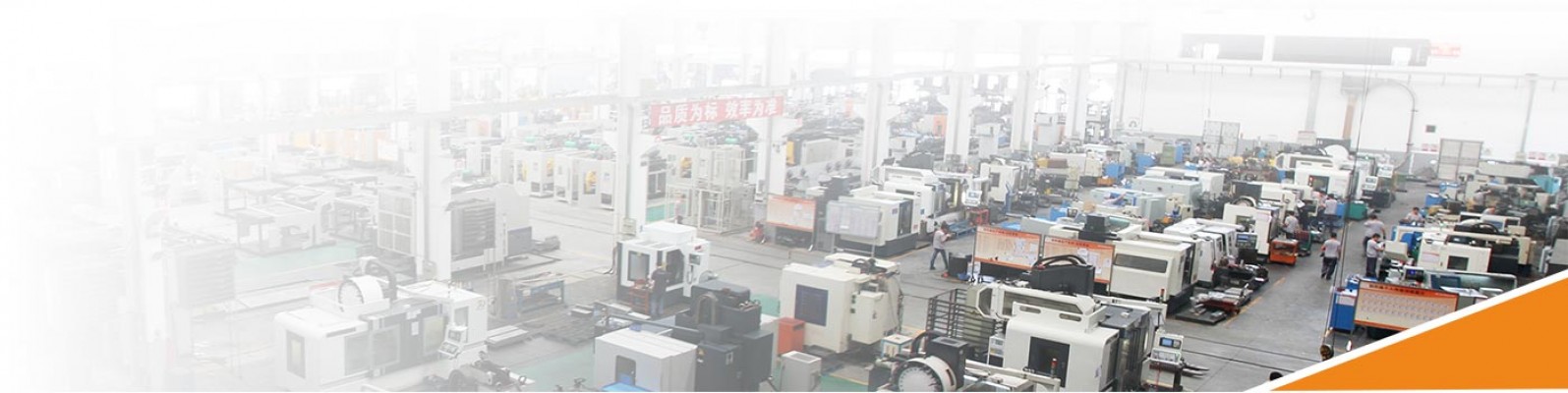
Why an Extrusion Blow Molding Machine Factory with In-House Machining Delivers Better Precision
Why an Extrusion Blow Molding Machine Factory with In-House Machining Delivers Better Precision
An extrusion blow molding machine factory with in-house machining delivers better precision because it controls the entire tolerance chain from design to shipment. Outsourced machining creates tolerance stacking, communication delays, weaker quality verification, and dispersed process knowledge. In-house machining keeps mold making, die head production, machine component manufacturing, assembly, testing, and service under one roof. This allows the factory to machine molds and machines together, verify alignment before shipment, and trace quality issues to their source.
Precision matters in every part of the line. Blow molds need accurate cavities, parting lines, neck threads, and cooling channels. Die heads need concentricity and smooth flow. Machines need parallel platens, straight tie bars, and repeatable clamping. Central feeding systems need consistent material drying and conveying. Auxiliary equipment such as crushers, mixers, chillers, and conveyors must integrate seamlessly. When all these elements are precise, bottles have uniform wall thickness, leak-free necks, stable dimensions, and lower scrap rates.
Guangdong Leshan Intelligent Equipment Corp., Ltd., known as Leshan, applies this principle through turnkey solutions. Leshan offers blow molding systems, centralized feeding systems, fully automatic systems, customized project solutions, and comprehensive support. Its blow molds use high-precision steel and achieve tolerances within ±0.05 mm. Its machines run at 2,000 to 5,000 bottles per hour per station. Its centralized feeding reduces material loss by 15 to 20%. Its quick mold-change system cuts downtime to under 10 minutes. Its molds last 5 to 8 years, and its auxiliary systems reduce maintenance costs by 20%.
Leshan has over 15 years of experience. In one case, a beverage company produced over 50 million bottles annually with zero mold failure for 2 consecutive years. A cosmetics brand increased efficiency by 30% with a multi-layer PET line. An industrial container line ran 24/7 for 18 months and achieved ROI in under 12 months. Leshan products meet ISO 9001 and CE standards, with defect rates under 0.5%. By controlling machining in-house, Leshan delivers precision that is built, tested, and proven, not just promised.
Precision is not a luxury in extrusion blow molding. It is the foundation of every stable production run, every leak-free bottle, every uniform wall thickness, and every satisfied customer. When a factory controls its machining processes under one roof, it can control precision at the source. That is the central argument of this article. It explains why an extrusion blow molding machine factory with in-house machining delivers better precision than a factory that outsources critical components. It also shows how Guangdong Leshan Intelligent Equipment Corp., Ltd., known as Leshan, applies this principle through turnkey solutions, advanced blow molding systems, centralized feeding systems, fully automatic systems, customized project solutions, and comprehensive support.
Understanding Extrusion Blow Molding and the Demand for Precision
Extrusion blow molding is a manufacturing process used to produce hollow plastic parts. A heated plastic parison is extruded, captured inside a mold, inflated with air, cooled, and then ejected as a finished bottle, container, or industrial part. The process seems simple at a glance, but the physics behind it are demanding. The parison must have a consistent wall thickness. The mold must close with exact alignment. The blow pin must enter at the correct angle. The cooling channels must remove heat evenly. The clamping force must remain stable across thousands of cycles. Every one of these variables depends on the precision of the machine and the mold.
When precision is low, the consequences appear quickly. Bottles may have thin spots that fail leak tests. Necks may be oval instead of round. Threads may not accept caps properly. Wall thickness may vary from one side of the bottle to the other. Cycle times may increase because cooling is uneven. Scrap rates may rise. Maintenance teams may spend more time adjusting and less time producing. In high-volume production, even a small loss of precision becomes a large financial problem.
That is why leading manufacturers look beyond the machine specification sheet. They examine how the machine was built. They ask who machined the die head, who ground the mold cavity, who aligned the platens, and who verified the tolerances. The answer to those questions often determines whether a production line runs smoothly for years or struggles from the first shift.
Precision Starts with the Mold and the Machine
In extrusion blow molding, the mold and the machine are not separate islands. They are a single precision system. The mold defines the final shape, surface finish, and wall thickness distribution. The machine defines the parison, the clamping motion, the blowing pressure, and the cooling behavior. If the mold is made in one factory and the machine in another, the two may never reach their full potential. If both are made under one roof, the factory can optimize them together.
This is where in-house machining becomes a strategic advantage. A factory with in-house machining can produce molds, die heads, blow pins, calibration sleeves, and machine components with direct control over tolerance, material, heat treatment, and inspection. It can test the mold on the machine before shipment. It can adjust the machine to match the mold. It can solve problems before the customer ever sees them.
The Hidden Costs of Outsourced Machining
Many machine builders outsource machining to third-party workshops. On paper, this approach can look efficient. The builder avoids investment in CNC equipment, skilled machinists, and quality control systems. The builder can scale production by adding more suppliers. But the hidden costs often outweigh the apparent savings.
First, tolerance stacking becomes a serious risk. Each supplier works to its own interpretation of the drawing. A die head may be machined within a general tolerance, but when it is assembled with a blow pin from another supplier, the combined error can exceed the acceptable range. The machine may still run, but it may not run with the precision required for thin-wall bottles or multi-layer containers.
Second, communication slows down. When a design change is needed, the machine builder must send updated drawings, wait for confirmation, inspect samples, and coordinate shipping. Days or weeks can pass. In a competitive market, that delay can cost a customer a product launch or a seasonal order.
Third, quality verification is weaker. The machine builder may not have full visibility into the supplier's machining process. The builder may only inspect the final part. If the part is out of tolerance, the builder may not know whether the problem came from the CNC program, the tooling, the material, or the operator. Root cause analysis becomes guesswork.
Fourth, intellectual property and process knowledge are dispersed. The precise geometry of a die head, the surface finish of a mold cavity, and the cooling layout of a blow mold are competitive advantages. When these details are shared with outside suppliers, the factory loses some control over its own know-how.
In contrast, a factory with in-house machining keeps design, manufacturing, assembly, testing, and service in one continuous loop. That loop is the engine of precision.
What In-House Machining Really Means
In-house machining is not just owning a few lathes and milling machines. It is a complete manufacturing capability. It includes CNC machining centers, precision lathes, grinding machines, electrical discharge machining, wire cutting, deep-hole drilling, heat treatment, surface treatment, and metrology. It includes skilled machinists who understand both the drawing and the application. It includes quality engineers who measure not only dimensions but also geometry, surface finish, hardness, and alignment.
For an extrusion blow molding machine factory, in-house machining covers several critical areas:
- Mold manufacturing: Cavity and core machining, parting line preparation, neck thread cutting, cooling channel drilling, and surface polishing.
- Die head manufacturing: Precision boring, taper machining, flow channel polishing, and concentricity control.
- Machine component manufacturing: Platens, tie bars, clamping mechanisms, extruder screws, barrels, and frame structures.
- Auxiliary equipment manufacturing: Crusher blades, mixer shafts, chiller components, and conveyor frames.
- Tooling and fixtures: Custom jigs, alignment tools, and testing fixtures that ensure repeatable assembly.
When all these capabilities are under one roof, the factory can control the entire tolerance chain. It can machine a mold to fit a specific machine. It can machine a machine to accept a specific mold. It can verify the fit before shipment. It can train its service team on the exact geometry of the parts they will support.
Precision Tolerance and the ±0.05 mm Benchmark
In blow molding, precision is often measured in fractions of a millimeter. Leshan, for example, applies precision engineering that ensures mold tolerance within ±0.05 mm. That level of tolerance is not achieved by accident. It requires rigid machine tools, temperature-controlled machining environments, high-quality cutting tools, skilled operators, and rigorous inspection. It also requires a manufacturing culture that treats every micron as important.
Why does ±0.05 mm matter? Consider the neck finish of a bottle. If the thread diameter is too large, the cap may leak. If it is too small, the cap may not fit. If the thread pitch is off, the cap may cross-thread. Consider the parting line. If the mold halves do not align within a few hundredths of a millimeter, flash will form. Flash must be trimmed, which adds labor and scrap. Consider the wall thickness. If the die head is off-center, one side of the parison will be thicker than the other. The bottle will be heavier, cooling will be uneven, and cycle time will increase.
At ±0.05 mm, the mold and machine can work together with minimal compensation. The process window becomes wider. The operator has more room to adjust without losing quality. The production line becomes more stable, more predictable, and more profitable.
How In-House Machining Improves Each Stage of Production
Design and Engineering
In-house machining allows design and manufacturing to work together from the beginning. Design engineers can consult machinists about feasible tolerances, tool access, and material behavior. Machinists can suggest changes that reduce cost or improve precision. This collaboration is difficult when machining is outsourced. When the design is finalized, the factory can begin machining immediately. There is no waiting for a supplier to review the drawings. There is no risk of misinterpretation. The design intent is carried directly into the metal.
Prototyping and Validation
Prototyping is where precision is proven. A factory with in-house machining can produce a prototype mold or die head in days instead of weeks. It can test the prototype on its own blow molding machine. It can measure the resulting bottles, inspect wall thickness, run leak tests, and check cap fit. If adjustments are needed, the factory can modify the tooling and retest immediately. This rapid iteration loop produces better designs and faster time to market.
Mold Manufacturing
Blow molds are the heart of the process. They must withstand high temperature and pressure. They must cool quickly and evenly. They must maintain stable dimensions over millions of cycles. In-house mold manufacturing gives the factory control over every detail. The mold steel can be selected for hardness, toughness, and thermal conductivity. The cavity can be machined with high-speed CNC and then finished by EDM or precision grinding. The cooling channels can be drilled and baffled for optimal heat removal. The neck area can be machined with special attention to thread accuracy and sealing surfaces.
Leshan blow molds are made of high-precision steel to ensure stable dimensions and accurate bottle openings. They are customizable in capacity, shape, and wall thickness. Quick mold change is supported, which minimizes downtime. The key advantages are clear: precision design ensures uniform wall thickness, high temperature and pressure resistance provide a long lifespan, and efficient cooling reduces cycle time and boosts output.
Die Head and Extruder Manufacturing
The die head shapes the parison. If the die head is not concentric, the parison will be uneven. If the flow channels are rough, the melt will hesitate and create weld lines. If the temperature control is poor, the parison will sag or freeze. In-house machining allows the factory to bore the die head with high concentricity, polish the flow channels to a mirror finish, and integrate precise heating zones. The extruder screw and barrel can also be machined in-house. The screw flight geometry, compression ratio, and surface hardness all affect melt quality. When these components are made together, they are matched to each other.
Machine Assembly and Alignment
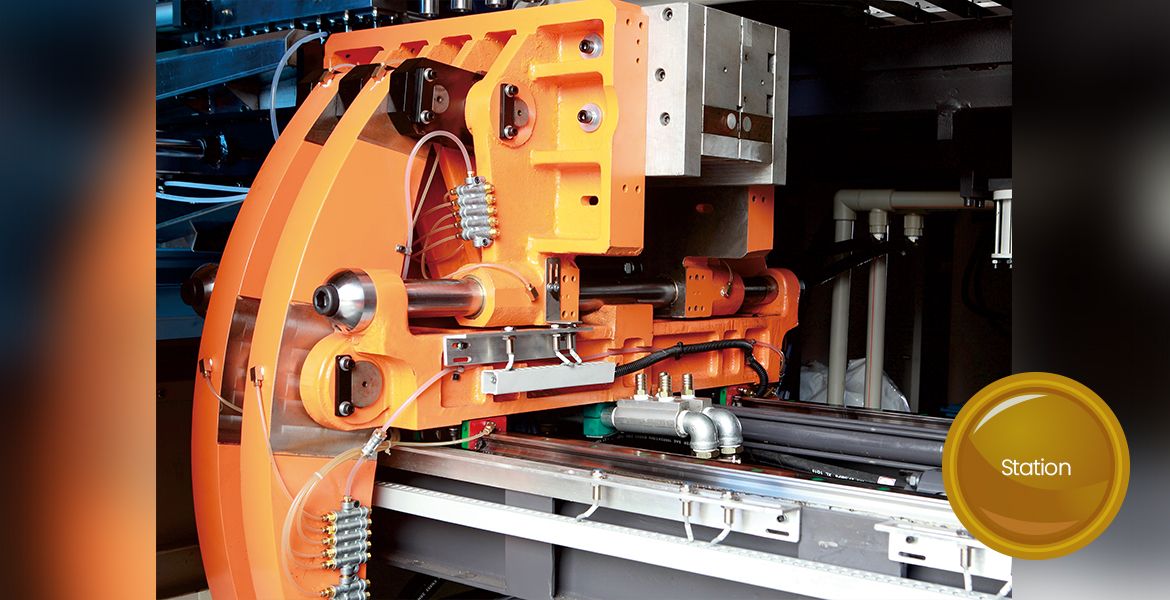
Assembly is where individual precision parts become a precision machine. The platens must be parallel. The tie bars must be straight. The clamping mechanism must move smoothly. The blow pin must align with the mold neck. The frame must be rigid enough to resist vibration. In-house machining provides the flatness, squareness, and concentricity needed for proper alignment. It also provides the fixtures and gauges needed to measure alignment during assembly. If a problem is found, the factory can machine a correction immediately. It does not have to wait for a supplier to rework a part.
Testing and Quality Control
Testing is the final proof of precision. A factory with in-house machining can run the machine with the actual mold, under production conditions, before shipment. It can measure cycle time, wall thickness distribution, bottle weight, neck dimensions, and leak rate. It can verify that the machine meets the customer's specifications. If the test reveals a problem, the factory can trace it back to the exact machining operation. This closed-loop quality control is much stronger than inspecting incoming parts from multiple suppliers.
The Leshan Approach: Turnkey Precision from One Source
Guangdong Leshan Intelligent Equipment Corp., Ltd., known as Leshan, specializes in turnkey solutions that simplify production and enhance efficiency. Its expertise covers a wide range of plastic molding technologies, ensuring seamless operation, increased output, and reduced operational costs. The company is more than a supplier. It is a partner in success. Its approach reflects the principles described in this article: control the critical processes, integrate the system, and deliver precision that lasts.
Leshan key offerings include:
- Blow Molding Systems: Advanced, precision-engineered machines designed for consistent, high-quality production.
- Centralized Feeding Systems: Automated material handling solutions that improve efficiency, reduce material waste, and ensure seamless feeding.
- Fully Automatic Systems: Intelligent automation technology that minimizes downtime, enhances efficiency, and optimizes workflow.
- Customized Project Solutions: Tailor-made systems designed to meet specific production requirements, from initial planning and design to final installation and operation.
- Comprehensive Support: End-to-end assistance, including technical consulting, system integration, maintenance, and upgrades.
These offerings are supported by proven expertise, tailored solutions, reliability and durability, a customer-centric approach, and innovative technology. Leshan continuously improves and optimizes its products to stay ahead of industry advancements. For customers, this means a partner who understands the entire production chain, not just one machine.
Blow Molds by Leshan
Leshan blow molds are used for forming bottles, containers, and other plastic products. They are compatible with single-layer, double-layer, or multi-layer extrusion blow molding machines. They are made of high-precision steel to ensure stable dimensions and accurate bottle openings. They are customizable in capacity, shape, and wall thickness. Quick mold change is supported. The key advantages include precision design for uniform wall thickness, high temperature and pressure resistance for a long lifespan, and efficient cooling that reduces cycle time and boosts output.
Central Feeding System by Leshan
The Leshan central feeding system centrally controls the conveying and drying of plastic materials. It ensures stable temperature and reduces manual labor. It can connect multiple extruders or blow molding machines for centralized management. Its key advantages include high automation that reduces labor costs, efficient conveying that minimizes material waste, and compatibility with multiple plastic types such as PET, PP, and PE. In a precision-focused factory, centralized feeding is not just a convenience. It is a way to keep material conditions consistent, which directly affects parison quality and final part precision.
Auxiliary Equipment by Leshan
Leshan also provides auxiliary equipment that supports the entire production line. The main types and functions include:
- Crusher: Recycles scrap and edge materials by crushing them.
- Mixer: Evenly mixes different colors or functional plastic pellets.
- Chiller/Cooling System: Maintains mold and product temperature, ensuring precision.
- Conveyor Belt: Automatically transports finished products for continuous production.
The key advantages of these auxiliary systems are improved production line efficiency and product quality, automated operation that reduces complexity, and durable design that minimizes maintenance costs. When these systems are integrated with the blow molding machine and molds, the entire line becomes more precise and more reliable.
Blow Molding Machine by Leshan
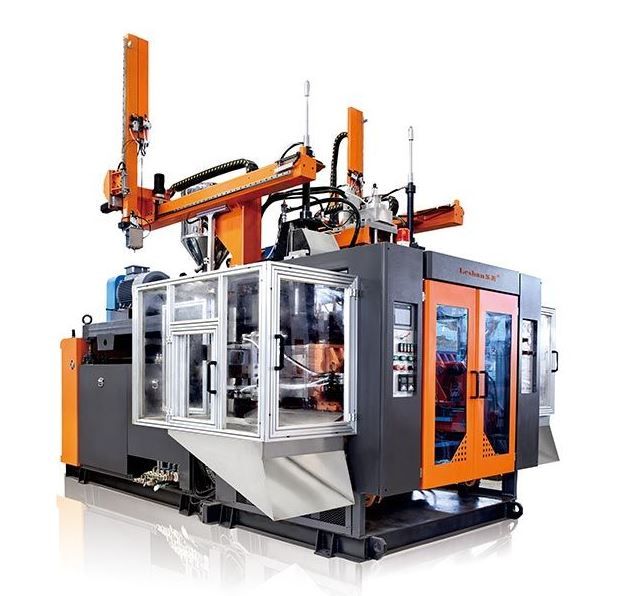
The blow molding machine is the core equipment for producing plastic bottles and containers. Leshan offers semi-automatic, fully automatic, and multi-station models to meet different production needs. The key advantages include precise control of pressure and temperature for consistent quality, high output design for large-scale production, and compatibility with various molds for different bottle specifications. Applications include beverage bottles, condiment bottles, cosmetic containers, industrial chemical containers, and more.
Core Advantages That Prove the Value of In-House Precision
Expertise and Reliability
Leshan has over 15 years of experience in designing and manufacturing blow molding systems. This experience is backed by precision engineering that ensures mold tolerance within ±0.05 mm, guaranteeing consistent bottle quality. In one case, Leshan partnered with a leading beverage company to produce over 50 million bottles annually with zero mold failure for 2 consecutive years. That result is not simply a matter of good luck. It is the outcome of controlled machining, rigorous inspection, and a deep understanding of how molds and machines interact.
High Efficiency and Productivity
Fully automated production lines from Leshan reduce labor by up to 40%. Multi-station blow molding machines achieve production speeds of 2,000 to 5,000 bottles per hour per station. Central feeding systems reduce material loss by 15 to 20% and ensure uniform drying for better product consistency. These numbers matter because precision and productivity are linked. When the mold and machine are precise, the line can run faster without producing defects. When material feeding is consistent, the parison is more stable. When cooling is efficient, cycle time drops. The result is more bottles per hour and lower cost per bottle.
Customization and Flexibility
Leshan supports custom bottle designs, capacities from 100 mL to 10 L, and multi-layer PET or PP blow molding. A quick mold-change system minimizes downtime to under 10 minutes, allowing fast production adaptation. In one case, Leshan customized a multi-layer PET line for a cosmetics brand, increasing production efficiency by 30% while maintaining strict aesthetic standards. Customization requires precision because every new bottle shape, capacity, and layer structure demands a new mold and new machine settings. A factory with in-house machining can respond quickly and accurately to these demands.
Durability and Cost-Effectiveness
High-grade mold steel and advanced cooling systems extend mold life to 5 to 8 years under continuous production. Auxiliary systems such as crushers, mixers, chillers, and conveyors integrate seamlessly, reducing maintenance costs by 20%. In one case, an industrial container line ran 24 hours a day, 7 days a week for 18 months with minimal maintenance interruptions, achieving return on investment in under 12 months. Durability is a direct benefit of precision. When parts fit correctly, they wear evenly. When cooling is uniform, thermal stress is lower. When alignment is correct, vibration and friction are reduced. The machine lasts longer and costs less to own.
Quality and Compliance
Leshan products meet ISO 9001 and CE standards, ensuring safety and reliability. Continuous monitoring with visual inspection and leak-testing systems guarantees defect rates under 0.5%. Compliance is not just a certificate on the wall. It is a commitment to repeatable processes. In-house machining makes that commitment possible because the factory controls the variables that affect quality. It can document every machining step, every inspection result, and every test run. It can trace a finished bottle back to the raw material, the mold, the machine, and the operator.
Why In-House Machining Delivers Better Precision: A Detailed Comparison
To understand the advantage, compare two factories. Factory A outsources machining. Factory B machines in-house. Both claim to build extrusion blow molding machines. Both offer similar specifications. But their actual precision differs.
Factory A: Outsourced Machining
- Multiple suppliers produce different components.
- Tolerances are interpreted independently.
- Assembly relies on adjustment and compensation.
- Quality problems are discovered late.
- Design changes take weeks.
- Process knowledge is dispersed.
- Mold and machine may not be optimized together.
- Service team may not know the exact geometry of critical parts.
Factory B: In-House Machining
- One factory controls the entire tolerance chain.
- Tolerances are consistent across all components.
- Assembly is precise by design, not by adjustment.
- Quality problems are caught during machining.
- Design changes can be made in days or hours.
- Process knowledge stays in the factory.
- Mold and machine are engineered as one system.
- Service team has direct access to original drawings and machining records.
The difference is not marketing. It is physics. When a mold is machined in the same factory that builds the machine, the factory can measure the mold, measure the machine, and match them. It can machine the die head to align with the blow pin. It can machine the platens to match the mold base. It can test the complete system before shipment. This is how precision is achieved.
Precision in Blow Molds: The Foundation of Bottle Quality
Blow molds determine the shape, surface, and wall thickness of the final product. A precision mold has several characteristics. The cavity and core are machined to exact dimensions. The parting line is flat and aligned. The neck thread is cut with the correct pitch and diameter. The cooling channels are positioned to remove heat evenly. The surface is polished to the required finish. The mold base is rigid and stable.
When these characteristics are present, the blow molding process becomes more forgiving. The parison inflates evenly. The bottle cools uniformly. The neck stays round. The bottom is flat. The label area is smooth. The bottle weight is consistent. The cycle time is shorter. The scrap rate is lower.
Leshan blow molds are designed with these goals in mind. They are made of high-precision steel. They are compatible with single-layer, double-layer, or multi-layer machines. They are customizable in capacity, shape, and wall thickness. Quick mold change is supported. The key advantages are precision design for uniform wall thickness, high temperature and pressure resistance for long lifespan, and efficient cooling for reduced cycle time and higher output.
Precision in Central Feeding: Consistent Material, Consistent Parison
Precision does not stop at the mold. It extends to material handling. If the plastic pellets have inconsistent moisture, the parison will have bubbles or weak spots. If the color masterbatch is not mixed evenly, the bottle will have streaks. If the feeding system stops and starts, the extruder will surge. These problems reduce precision and increase scrap.
A centralized feeding system solves these problems by controlling conveying and drying in one place. It ensures stable temperature and reduces manual labor. It can connect multiple extruders or blow molding machines for centralized management. The key advantages are high automation, reduced labor costs, efficient conveying, minimized material waste, and compatibility with multiple plastic types such as PET, PP, and PE.
Leshan provides centralized feeding systems as part of its turnkey solutions. By integrating feeding with the blow molding machine, Leshan ensures that the material reaches the extruder in the right condition at the right time. This integration is another form of precision. It is process precision, not just dimensional precision.
Precision in Auxiliary Equipment: Supporting the Whole Line
Auxiliary equipment may seem secondary, but it has a direct impact on precision. A crusher that produces inconsistent regrind can cause wall thickness variation. A mixer that does not blend evenly can cause color and property variation. A chiller that cannot hold temperature can cause warping and dimensional drift. A conveyor that jams can cause production stops and inconsistent cooling.
Leshan auxiliary equipment is designed to work together. The crusher recycles scrap and edge materials. The mixer evenly mixes different colors or functional plastic pellets. The chiller and cooling system maintain mold and product temperature. The conveyor belt automatically transports finished products for continuous production. The key advantages are improved production line efficiency and product quality, automated operation that reduces complexity, and durable design that minimizes maintenance costs.
When these systems are integrated with the blow molding machine and molds, the entire line becomes more precise. The operator can focus on quality instead of firefighting. The maintenance team can focus on preventive care instead of emergency repairs. The production manager can focus on output instead of scrap.
Precision in the Blow Molding Machine: The Core of the System
The blow molding machine is the core equipment for producing plastic bottles and containers. It must control pressure, temperature, clamping force, and cycle time with high accuracy. It must be available in semi-automatic, fully automatic, or multi-station models to meet different production needs. It must be compatible with various molds for different bottle specifications.
Leshan blow molding machines are designed for precise control of pressure and temperature, ensuring consistent quality. They have a high output design that supports large-scale production. They are compatible with various molds for different bottle specifications. Applications include beverage bottles, condiment bottles, cosmetic containers, industrial chemical containers, and more.
In-house machining contributes to machine precision in several ways. The extruder screw and barrel are machined to exact tolerances. The die head is bored and polished for smooth melt flow. The platens are machined flat and parallel. The tie bars are straightened and hardened. The clamping mechanism is machined for smooth, repeatable motion. The blow pin is aligned with the mold neck. The frame is welded and machined to resist vibration. Every one of these details affects the final bottle.
Case Studies: Precision That Delivers Results
Beverage Bottles: 50 Million Bottles per Year with Zero Mold Failure
Leshan partnered with a leading beverage company to produce over 50 million bottles annually. The line ran with zero mold failure for 2 consecutive years. This result was possible because the molds were machined in-house to ±0.05 mm tolerance. The cooling channels were optimized. The neck threads were cut precisely. The machine was aligned to the mold. The result was a stable process that produced high-quality bottles day after day.
Cosmetics Containers: Multi-Layer PET Line Increases Efficiency by 30%
Leshan customized a multi-layer PET line for a cosmetics brand. The line increased production efficiency by 30% while maintaining strict aesthetic standards. Multi-layer PET is challenging because each layer must be uniform, and the visual appearance must be flawless. In-house machining allowed Leshan to produce precise die heads and molds that met these requirements. The quick mold-change system minimized downtime, and the centralized feeding system ensured consistent material. The customer received a line that could adapt to different bottle designs without sacrificing quality.
Industrial Containers: 24/7 Production for 18 Months with ROI under 12 Months
An industrial container line ran 24 hours a day, 7 days a week for 18 months with minimal maintenance interruptions. The customer achieved return on investment in under 12 months. The molds lasted 5 to 8 years under continuous production. Maintenance costs were reduced by 20% because the auxiliary systems integrated seamlessly. This case demonstrates that precision is not only about quality. It is also about uptime, durability, and profitability.

The Business Case for In-House Machining
Some manufacturers hesitate to invest in in-house machining because of the upfront cost. CNC machines, tooling, software, and skilled labor require capital. But the business case is strong when all factors are considered.
- Lower scrap rates: Precision reduces defects, which reduces wasted material and labor.
- Higher output: Stable processes allow faster cycle times and fewer interruptions.
- Lower maintenance costs: Well-matched parts wear less and last longer.
- Faster time to market: Prototyping and design changes happen quickly.
- Stronger customer relationships: Reliable quality builds trust and repeat orders.
- Protected intellectual property: Critical know-how stays inside the factory.
- Better service: The service team has direct access to original parts and drawings.
For a company like Leshan, in-house machining is not just a cost center. It is a competitive advantage. It allows Leshan to offer turnkey solutions that simplify production and enhance efficiency. It allows Leshan to customize systems for specific production requirements, from initial planning and design to final installation and operation. It allows Leshan to provide comprehensive support, including technical consulting, system integration, maintenance, and upgrades.
How to Evaluate a Blow Molding Machine Factory
When choosing a factory, buyers should look beyond the brochure. They should ask questions that reveal the true level of precision.
- Does the factory machine its own molds and die heads?
- What is the achievable mold tolerance?
- How does the factory verify concentricity and alignment?
- Can the factory run a test with the actual mold before shipment?
- What is the typical mold life under continuous production?
- How does the factory control material feeding and drying?
- What is the defect rate under normal production?
- How quickly can the factory make a design change?
- What support is available after installation?
A factory with in-house machining can answer these questions with specific data. It can show inspection records, test reports, and case studies. It can invite the buyer to see the machining floor and the assembly line. It can demonstrate that precision is not a claim but a daily practice.
Leshan: A Partner in Precision
Guangdong Leshan Intelligent Equipment Corp., Ltd. is more than just a supplier. It is a partner in success. Businesses choose Leshan for proven expertise, tailored solutions, reliability and durability, a customer-centric approach, and innovative technology. With over 15 years of experience, Leshan has the in-depth industry knowledge to deliver the best solutions. It does not believe in one-size-fits-all. Every project is customized to meet unique production needs. Its high-performance equipment is built to last, ensuring long-term operational stability. Its team listens, adapts, and delivers solutions that work best for the customer. It continuously improves and optimizes its products to stay ahead of industry advancements.
Leshan turnkey solutions cover blow molding systems, centralized feeding systems, fully automatic systems, customized project solutions, and comprehensive support. The company offers blow molds, central feeding systems, auxiliary equipment, and blow molding machines. Its products meet ISO 9001 and CE standards. Its defect rates are under 0.5%. Its molds achieve ±0.05 mm tolerance. Its machines run at 2,000 to 5,000 bottles per hour per station. Its quick mold-change system minimizes downtime to under 10 minutes. Its molds last 5 to 8 years. Its maintenance costs are reduced by 20%. These are not just numbers. They are the result of a precision-focused manufacturing strategy that includes in-house machining.
The Future of Precision in Extrusion Blow Molding
The market for plastic bottles and containers continues to grow. Demands for lightweighting, recycled content, multi-layer barriers, and sustainable materials are increasing. These trends will require even higher precision. Thin-wall bottles need tighter wall thickness control. Multi-layer containers need precise layer distribution. Recycled materials need consistent processing. Sustainable designs need efficient cooling and low scrap.
Factories with in-house machining will be better positioned to meet these challenges. They can experiment with new mold designs. They can machine new die heads. They can test new materials. They can integrate new automation. They can do all of this without waiting for outside suppliers. They can innovate faster and deliver more reliable solutions.
Leshan is already investing in this future. Its focus on intelligent equipment, automation, and turnkey solutions reflects a commitment to precision and productivity. Its expertise in blow molding, centralized feeding, and auxiliary equipment allows it to optimize the entire line. Its customer-centric approach ensures that every solution is tailored to the application. Its innovative technology keeps it ahead of industry advancements.
Conclusion: Precision Is Built, Not Promised
Precision in extrusion blow molding is not achieved by chance. It is built into the mold, the die head, the machine, the feeding system, and the auxiliary equipment. It is protected by quality control, testing, and service. It is sustained by a manufacturing culture that values tolerance, consistency, and continuous improvement.
An extrusion blow molding machine factory with in-house machining delivers better precision because it controls the entire tolerance chain. It can machine molds and machines together. It can test the complete system before shipment. It can respond quickly to design changes. It can trace quality problems to their source. It can protect its process knowledge. It can offer turnkey solutions that simplify production and enhance efficiency.
Guangdong Leshan Intelligent Equipment Corp., Ltd. exemplifies this approach. With over 15 years of experience, precision engineering within ±0.05 mm, and a proven track record of high-output, durable, and compliant systems, Leshan delivers more than machines. It delivers confidence. It delivers productivity. It delivers precision that lasts. For manufacturers who want better bottles, lower costs, and stronger returns, the choice is clear. Partner with a factory that machines in-house. Partner with Leshan.